
When You See Bees Like This, Don’t Be Afraid — What to Do (and What Not to Do)
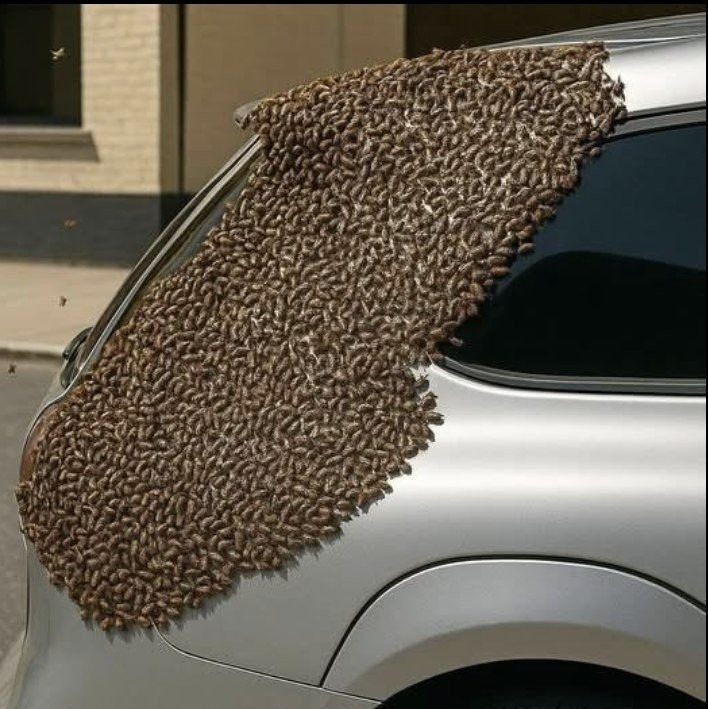
It can be startling to step outside and see a large cluster of bees gathered together on a tree branch, fence, wall, or even a car. Many people panic, fearing an attack, and immediately think about calling emergency services or trying to get rid of them.
But take a breath. This is usually a natural and harmless event—and the best response is often to do nothing at all.
What You’re Actually Seeing: A Bee Swarm
When bees cluster tightly together like a living ball, they are usually swarming. This happens when:
- A queen leaves the hive
- Thousands of worker bees follow her
- They temporarily rest while scouts search for a new home
This resting phase can last a few hours to a couple of days.
Why Swarming Bees Are Not Dangerous
Despite their intimidating appearance, swarming bees are:
- Not aggressive
- Focused on protecting the queen, not attacking people
- Uninterested in food or territory
They have no hive or honey to defend, which is when bees are usually most defensive.
What You Should NOT Do
❌ Do not panic
❌ Do not call firefighters or civil protection (unless there is immediate danger)
❌ Do not spray insecticides or poison
❌ Do not try to move or disturb them
❌ Do not kill them
These actions can stress the swarm, harm pollinators, and sometimes provoke defensive behavior.
What You SHOULD Do
✔ Keep a safe distance
✔ Keep children and pets away
✔ Close nearby windows and doors
✔ Observe quietly
In most cases, the swarm will leave on its own once a new location is found.
If the Bees Don’t Leave
If the swarm stays longer than 48 hours or settles in a problematic location:
- Contact a local beekeeper or beekeeping association
- Many beekeepers will relocate the swarm for free
- This saves the bees and solves the problem safely
Why Protecting Bees Matters
Bees are essential pollinators responsible for:
- Food production
- Plant biodiversity
- Healthy ecosystems
Killing a swarm not only harms the environment but also removes thousands of beneficial insects that are already under threat worldwide.
How to Tell Bees from Wasps
- Bees are hairy and rounder
- Wasps are smooth, shiny, and aggressive
- Swarming behavior is typical of bees, not wasps
If you’re unsure, take a photo and ask a local expert.
The Bottom Line
When you see bees clustered like this, don’t be afraid. They are resting, not attacking. The kindest—and safest—thing you can do is leave them alone and let nature take its course.
