
⭐ Are They Dangerous?
Good news: No.
Case-bearing moth larvae are not harmful to humans or pets. They don’t bite, sting, or spread disease.
But they can cause damage inside homes, especially if they find food sources such as:
- Wool
- Clothing fibers
- Carpets
- Stored grains
- Pet hair
- Dust buildup
They survive by eating keratin-based materials, much like common clothes moths.
⭐ How Do They Get Into the House?
These tiny larvae or their eggs can enter through:
- Open doors or windows
- Second-hand furniture or rugs
- Used clothing
- Potted plants
- Air vents
- Cracks or crevices
Once inside, they settle into quiet corners where dust, lint, and fabric fibers accumulate.
⭐ How to Recognize the Case-Bearing Moth Larva
Typical characteristics include:
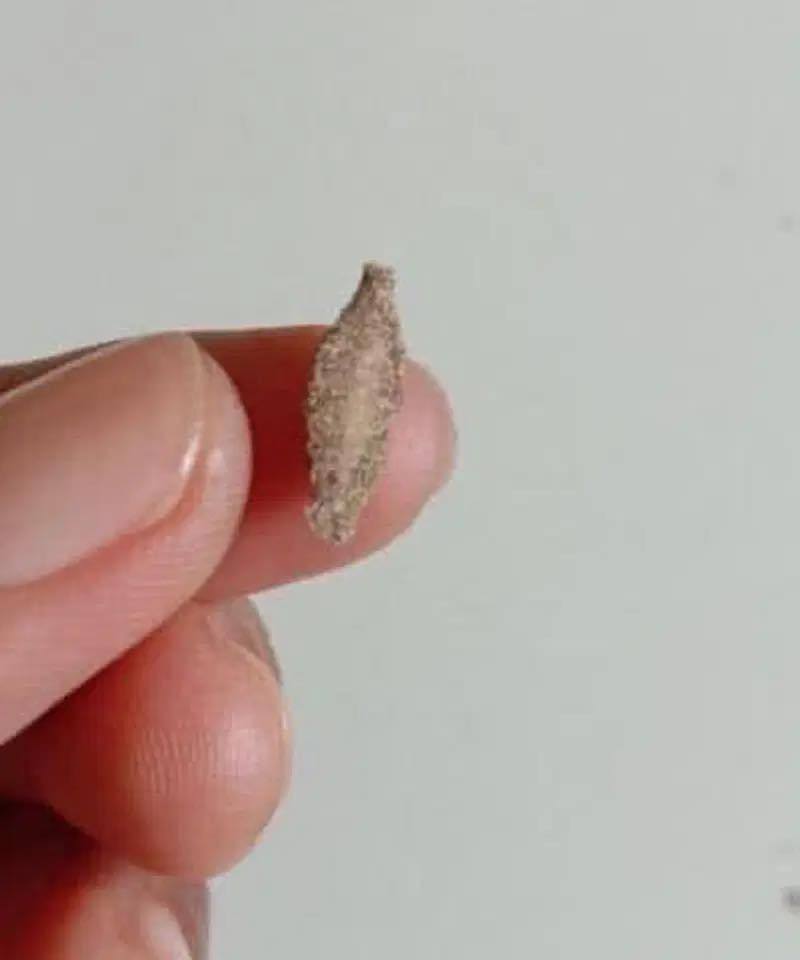
- A moving “tube” or “case” about 5–10 mm long
- A worm-like body emerging from one end
- A case made of lint, dust, hair, or tiny particles
- Slow crawling along walls, curtains, or ceilings
This appearance leads many to believe it’s a totally new insect species—but it’s simply a larval stage of a moth.
⭐ How to Remove Them Safely
To keep them under control:
✔ Reduce dust and lint
Regular vacuuming removes their food sources.
✔ Wash or dry-clean fabrics
This eliminates eggs and larvae hiding in clothing or rugs.
✔ Store clothing properly
Use sealed bags or containers for wool and natural fabrics.
✔ Seal entry points
Fix gaps in windows, doors, and vents.
✔ Use pheromone traps
Helpful for monitoring adult moth activity.
✔ Dispose of the larvae
Simply pick them up with tissue and throw them away.
They reproduce slowly, so eliminating food sources is usually enough to stop them from multiplying.
⭐ Why the Viral Name “Kamitetep”?
Social media often invents mysterious or exotic names to create curiosity and make common insects seem “new” or “rare.”
“Kamitetep” and “Phereoca Uterella” are popularized terms—but not scientific ones.
These creatures aren’t new, aren’t dangerous, and aren’t unknown to science.
They’re simply misunderstood.
⭐ Final Thoughts
The so-called “Kamitetep” is not a rare or terrifying new moth species—it’s just the larva of a common case-bearing moth.
Though they may look strange and even a little unsettling, they’re harmless and easy to manage with proper cleaning and prevention.
Still, their odd appearance makes them one of the most fascinating household insects—and a perfect example of how ordinary creatures become viral mysteries.
