
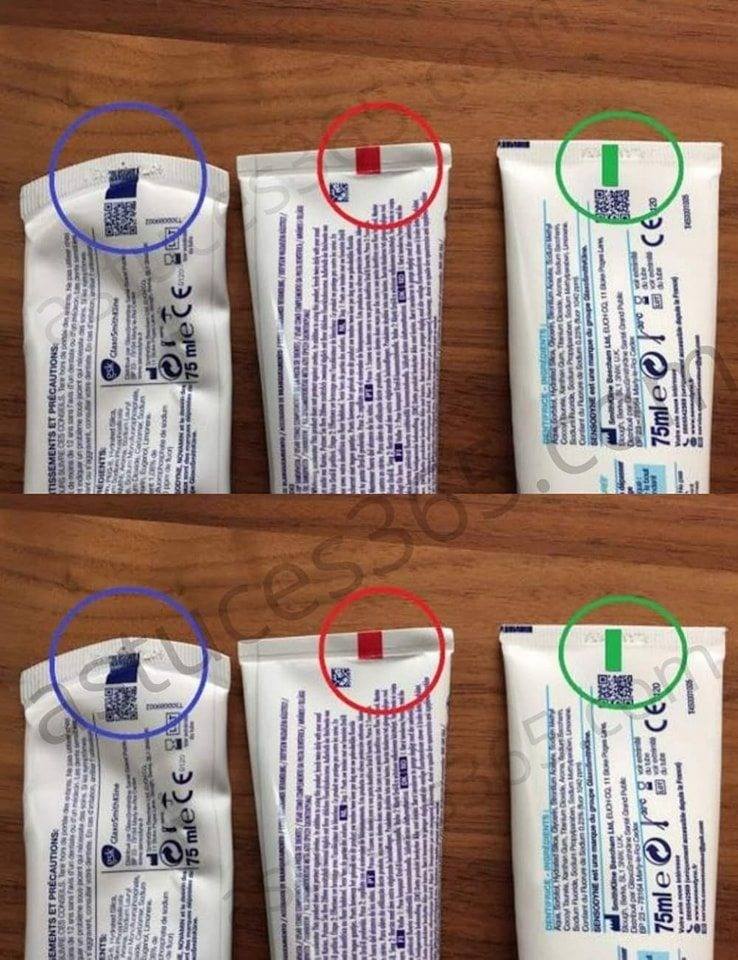
The Secret Behind the Colored Stripe on Your Toothpaste Tube
If you’ve ever looked closely at the bottom of a toothpaste tube, you may have noticed a small colored stripe or square—often black, blue, red, or green. Over the years, this tiny mark has sparked countless rumors online, with claims that it reveals whether your toothpaste is natural, chemical-filled, or even dangerous. But what does that colored stripe really mean?
Let’s clear up the mystery once and for all.
The Popular Myth
A common belief is that the color code tells you what ingredients are inside the toothpaste:
- Green = all natural
- Blue = natural plus medicine
- Red = natural and chemical
- Black = all chemicals
While this idea sounds convincing, it’s completely false. Toothpaste manufacturers do not use the colored stripe to communicate ingredient information to consumers.
The Real Purpose: Manufacturing Control
The colored stripe—often called a color mark or eye mark—is used during the manufacturing and packaging process. High-speed machines use sensors to detect this mark so they know exactly where to cut, fold, and seal the tube correctly.
In simple terms, the stripe helps machines:
- Align the packaging accurately
- Cut tubes to the correct size
- Seal the ends properly
The color itself doesn’t matter to consumers; it just needs to contrast with the tube design so machines can read it easily.
Why Different Colors Are Used
Manufacturers choose the color based on what works best with the tube’s design. For example:
- A black stripe works well on light-colored tubes
- A white or blue stripe may be used on darker packaging
The color has nothing to do with safety, quality, or ingredients.
How to Actually Know What’s in Your Toothpaste
If you want to understand what your toothpaste contains, the best place to look is:
- The ingredient list on the box or tube
- Labels such as “fluoride-free,” “whitening,” or “sensitive”
- Certifications or seals from dental associations
These provide real, reliable information—unlike the stripe myth.
Why the Myth Spread
The idea became popular because it was easy to share, sounded scientific, and played on people’s concerns about chemicals and health. Social media helped it spread quickly, even though it had no factual basis.
Final Thoughts
The colored stripe on your toothpaste tube isn’t a secret code about ingredients or safety—it’s simply a tool used in the manufacturing process. While it’s fun to wonder about small details like this, it’s always best to rely on verified information rather than viral myths.
So the next time you squeeze toothpaste onto your brush, you can smile knowing the truth behind that tiny stripe—and focus on what really matters: keeping your teeth clean and healthy. 🦷✨
