
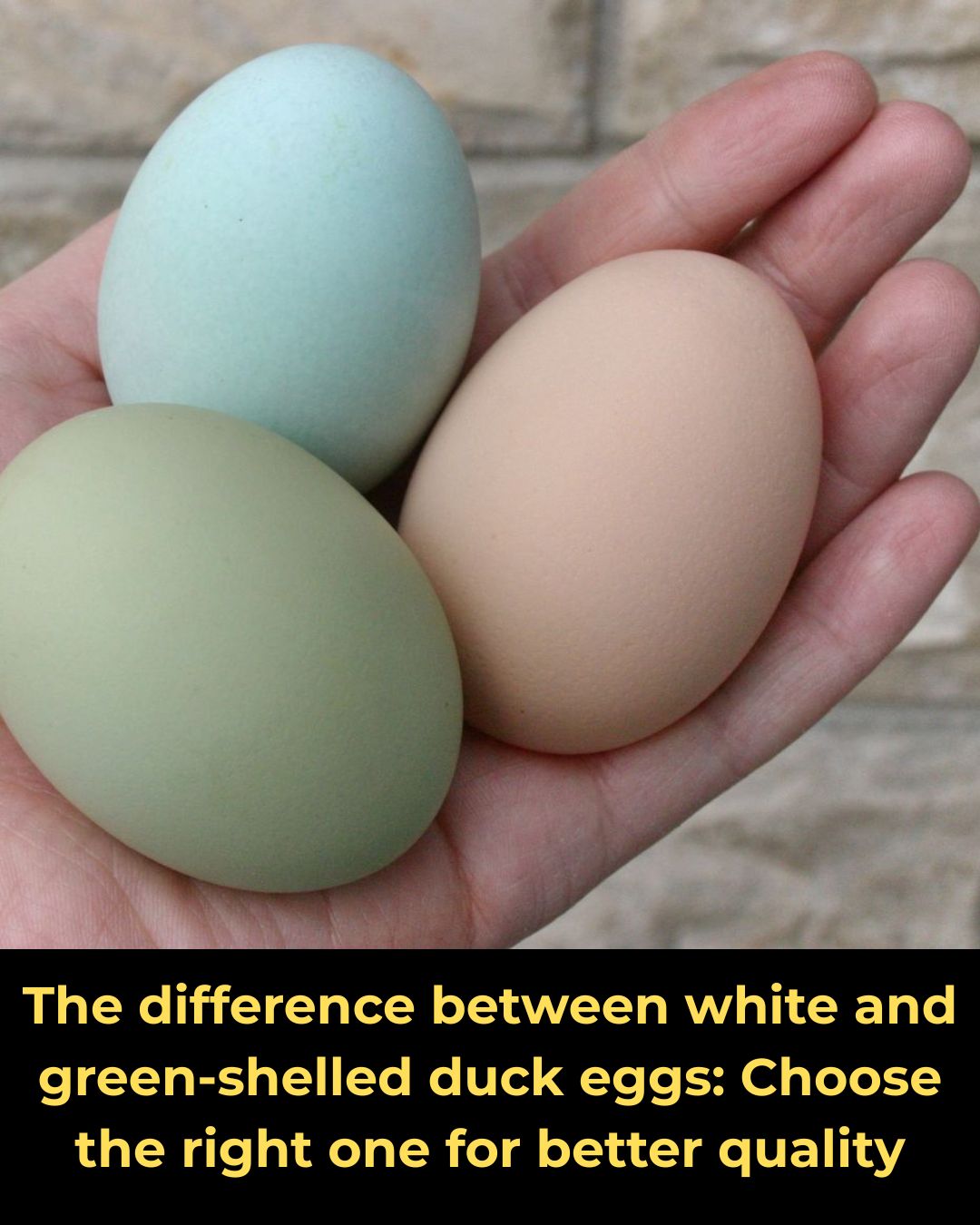
The Difference Between White and Green-Shelled Duck Eggs: Choose the Right One for Better Quality
Duck eggs are cherished for their rich flavor, vibrant yolks, and superior baking qualities. But if you’ve ever visited a farm market or bought directly from local producers, you may have noticed something interesting: duck eggs often come in different shell colors, most commonly white and green (sometimes bluish-green).
Many people assume that shell color reflects quality or freshness — but the truth is more nuanced. Understanding the differences can help you choose the best duck eggs for your meals, baking, or nutritional needs.
1. What Actually Determines the Shell Color?
The color of a duck egg shell is determined entirely by the breed of the duck, not the quality of the egg inside.
- White-shelled duck eggs typically come from breeds like the Pekin or White Layer Ducks.
- Green or blue-shelled duck eggs come from breeds like the Khaki Campbell, Indian Runner, or Mallard-derived ducks.
Just as chickens lay white, brown, or blue eggs depending on the breed, duck egg colors also come from genetics — not nutrition, health, or farming method.
2. Does Shell Color Affect Taste or Nutrition?
Short answer: No.
The inside of the egg — the yolk richness, thickness of the albumin, and nutrient content — depends primarily on:
- The duck’s diet
- Its environment
- The freshness of the egg
- The duck’s age and health
A duck fed insects, greens, and a protein-rich diet often produces eggs with darker yolks and richer flavor, regardless of shell color.
3. Differences You Might Notice (and Why They Happen)
Shell Thickness
Duck eggs already have thicker shells than chicken eggs, but some people notice that:
- Green-shelled eggs can feel slightly firmer
- White-shelled eggs may be a bit smoother
However, this is due to individual differences in ducks, not the color itself.
Freshness Indicator
Sometimes, you might see green-shelled duck eggs marketed as “farm fresh.” That’s because many heritage breeds that lay colored eggs are raised in small, natural-flock environments.
Still, shell color is not a freshness indicator — always check for clean shells, firmness, and the packing date.
4. Which Should You Choose for Better Quality?
Choose Based on:
✔ Freshness
✔ Source (free-range or clean farm environment)
✔ Duck diet
✔ Intended use (cooking vs. baking)
For Baking:
Duck eggs with larger, thicker yolks — often found in heritage breeds — give cakes and pastries better structure. Many bakers prefer eggs from green-shelled-egg breeds because these ducks are often pasture-raised and produce richer yolks.
For Everyday Cooking:
Either shell color works perfectly. Focus on how fresh the eggs are and how they were produced.
For Complete Cooking STEPS Please Head On Over To Next Page Or Open button (>) and don’t forget to SHARE with your Facebook friends
5. How to Select High-Quality Duck Eggs
Use this quick checklist:
- Clean, intact shells — no cracks
- Heavier eggs — indicates freshness
- Deep yellow or orange yolks — sign of a nutrient-rich diet
- Firm whites — shows the egg is fresh
- Purchase from trusted farmers or markets
Whether white or green, the best duck eggs are the ones that come from healthy, well-fed ducks.
Final Thoughts
While shell color may catch your eye, it doesn’t determine the taste, quality, or nutrition of duck eggs. The real difference lies in the breed of the duck and how it’s raised. Choose fresh eggs from reputable sources, and you’ll enjoy the rich flavor and superior cooking qualities that duck eggs are famous for — no matter what color the shell is.
