
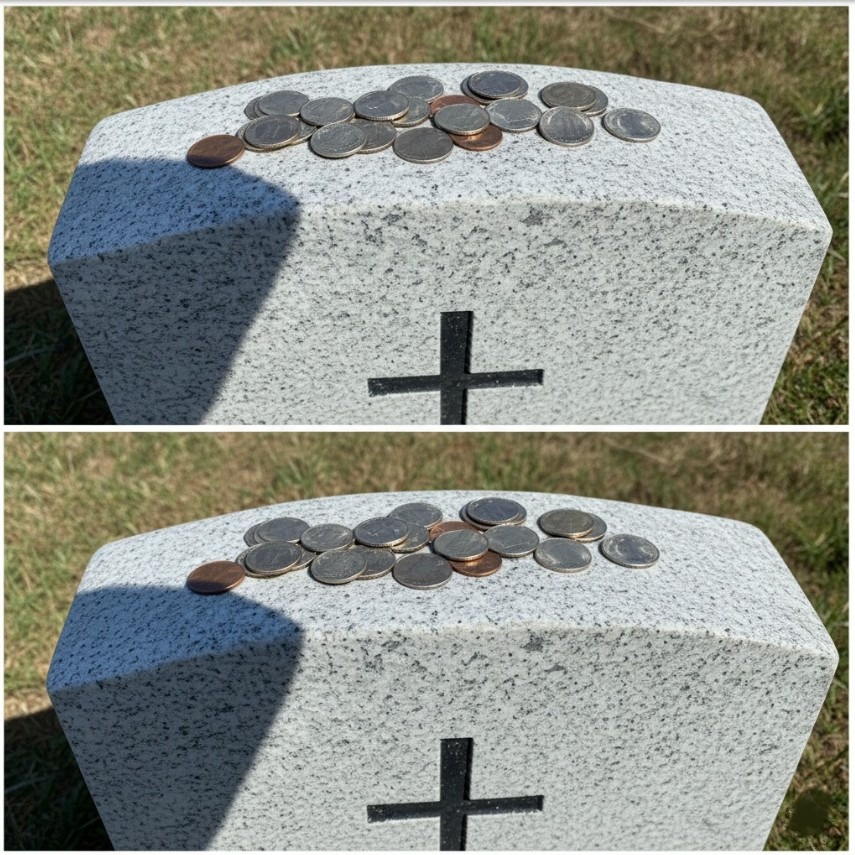
Meaning Behind the Tradition of Coins on Gravestones
Across cemeteries around the world, visitors may notice coins carefully placed on gravestones. To some, this might seem mysterious or accidental, but the act carries deep symbolic meaning rooted in history, respect, and remembrance. The tradition of leaving coins on gravestones spans cultures and centuries, serving as a quiet way to honor the dead and communicate messages without words.
Ancient Origins of the Practice
The tradition of placing coins with the dead dates back to ancient civilizations. In ancient Greek mythology, it was believed that after death, souls had to cross the river Styx to reach the afterlife. To do so, they needed to pay Charon, the ferryman of the underworld. Families placed a coin—often in the mouth or on the eyes of the deceased—to ensure safe passage. While modern practices no longer follow this belief literally, the symbolism of coins as a form of care and respect has endured.
The Romans also adopted similar customs, reinforcing the idea that coins represented preparation, honor, and remembrance. Over time, the meaning shifted from spiritual necessity to symbolic gesture.
Coins on Military Gravestones
In the United States and some other countries, placing coins on military gravestones has a specific and widely recognized meaning. This practice became especially common during the 20th century, particularly after major wars.
Different coins convey different messages:
- A penny signifies that someone visited the grave to pay their respects.
- A nickel indicates the visitor attended boot camp with the deceased.
- A dime means the visitor served alongside the person in the military.
- A quarter signifies that the visitor was present when the soldier died.
This tradition allows veterans and loved ones to communicate shared experiences and respect without needing to leave a written message. It also helps cemetery staff collect the coins, which are often donated to veterans’ organizations.
Cultural and Personal Meanings
Beyond military cemeteries, coins on gravestones can hold personal or cultural significance. In some traditions, coins are left as offerings to show continued connection with the deceased. In others, they symbolize good luck, gratitude, or the idea that the dead are not forgotten.
For some families, leaving a coin is a simple act of remembrance—something small but meaningful. It can be especially comforting for visitors who are unsure what to say or do when visiting a grave. The coin becomes a quiet sign of presence and respect.
Respect and Cemetery Etiquette
While the tradition is widely accepted, it’s important to follow cemetery rules and cultural norms. Coins should be placed gently on the headstone, not engraved or forced into crevices. Visitors should avoid leaving excessive objects that could damage the grave or interfere with maintenance.
Understanding the meaning behind the practice helps ensure it remains respectful rather than misunderstood as littering or vandalism.
Why the Tradition Endures
The simplicity of a coin is part of what makes this tradition so powerful. Coins are small, universal, and accessible to nearly everyone. They don’t fade like flowers or require words to explain their purpose. Instead, they quietly say, “You are remembered.”
In a fast-moving world, traditions like this endure because they provide a sense of connection—to history, to shared values, and to the people who came before us.
Conclusion
The tradition of placing coins on gravestones is a meaningful gesture rooted in ancient beliefs, military honor, and personal remembrance. Whether symbolizing a shared past, a respectful visit, or a message of gratitude, the coin serves as a timeless reminder that even small acts can carry deep significance. Through this simple tradition, the living continue to honor the dead with dignity, respect, and memory.
