
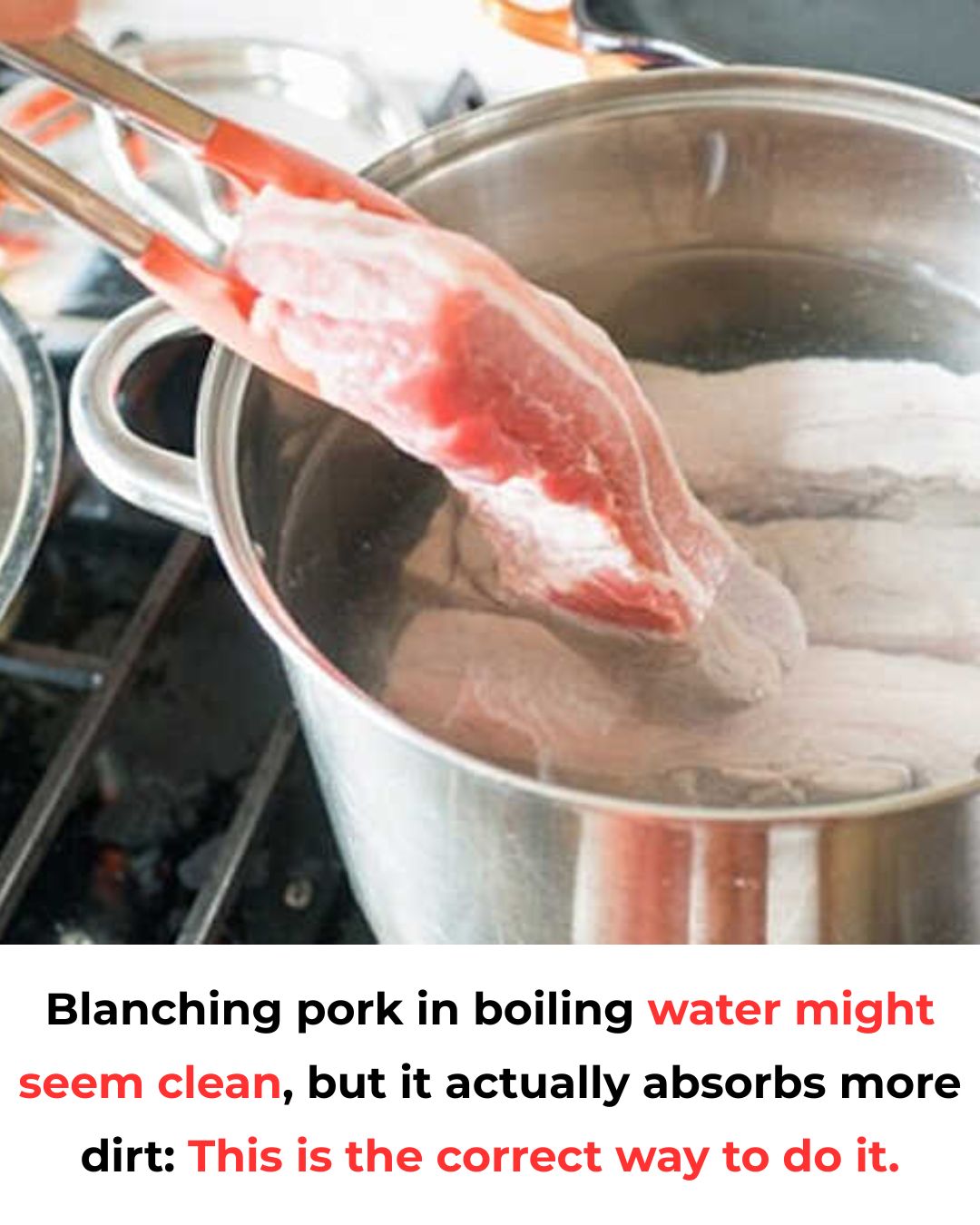
Blanching Pork in Boiling Water Might Seem Clean, but It Actually Absorbs More Dirt: This Is the Correct Way to Do It
Many home cooks believe that blanching pork directly in boiling water is the best way to remove impurities and unpleasant odors. While this method looks effective on the surface, it can actually cause the meat to absorb more impurities instead of removing them. Understanding the correct technique can greatly improve the flavor, texture, and cleanliness of your pork dishes.
Why Blanching Pork the Wrong Way Causes Problems
When pork is placed straight into rapidly boiling water, the outer layer of the meat tightens quickly. This sudden contraction traps blood residue, impurities, and odors inside the meat. Instead of being released into the water, these substances are sealed in, resulting in pork that may taste less clean and less fresh.
Additionally, boiling water can force impurities back into the meat fibers, making the broth cloudy and affecting the final dish.
The Correct Way to Blanch Pork
The key to properly cleaning pork is starting with cold water, not boiling water.
Step-by-Step Method:
- Rinse the pork under running water to remove surface debris.
- Place the pork in a pot and add cold water, enough to fully cover the meat.
- Add a few slices of ginger, scallions, or a small splash of cooking wine to help neutralize odors.
- Turn the heat to medium and slowly bring the water to a gentle boil.
- As the water heats up, impurities and foam will rise to the surface. Skim these off carefully.
- Once the water reaches a boil and the scum has been removed, take the pork out and rinse it briefly with warm water.
Why This Method Works
Starting with cold water allows the meat to gradually release blood and impurities before the surface tightens. This results in:
- Cleaner-tasting pork
- Less odor during cooking
- Clearer soups and broths
- Better texture in the final dish
When to Use This Technique
This blanching method is especially useful when preparing:
- Pork ribs for soups
- Pork belly for braising
- Bone-in pork cuts
- Traditional stews and slow-cooked dishes
Final Tip
Blanching pork isn’t about cooking it—it’s about preparing it correctly. Taking a few extra minutes to start with cold water makes a noticeable difference in taste and quality. Once you use this method, you’ll find your pork dishes are cleaner, more flavorful, and more enjoyable every time.
