
A Musty Smell in Your Hallway Closet? Here’s What You Can Rule Out Yourself
A musty odor drifting from a hallway closet is never pleasant—and it’s especially frustrating when your contractor is unavailable for weeks. The good news is that before calling in a professional, there are several common causes you can safely check and rule out on your own. Musty smells usually point to moisture, poor airflow, or something organic breaking down, and many of these issues are easy to investigate.
1. Rule Out Simple, Everyday Causes First
Start with the easiest possibilities:
- Stored items: Shoes, coats, cardboard boxes, or old fabric can absorb moisture and produce a musty smell over time. Remove everything from the closet and smell each item individually.
- Laundry residue: Even “clean” clothes can develop mildew odors if stored slightly damp. Wash affected items with vinegar or baking soda and allow them to dry completely before returning them.
If the smell disappears when the closet is empty, the problem is likely the contents—not the structure.
2. Check for Poor Air Circulation
Closets, especially in hallways, often have little airflow.
- Leave the closet door open for a day or two.
- Place a small fan nearby to improve circulation.
If the smell fades, stagnant air is likely the culprit. A permanent fix may be as simple as adding ventilation or using moisture-absorbing products.
3. Look for Moisture Without Opening Walls
Moisture is the most common cause of musty odors.
- Feel the walls and floor: Any coolness, dampness, or soft spots may indicate moisture.
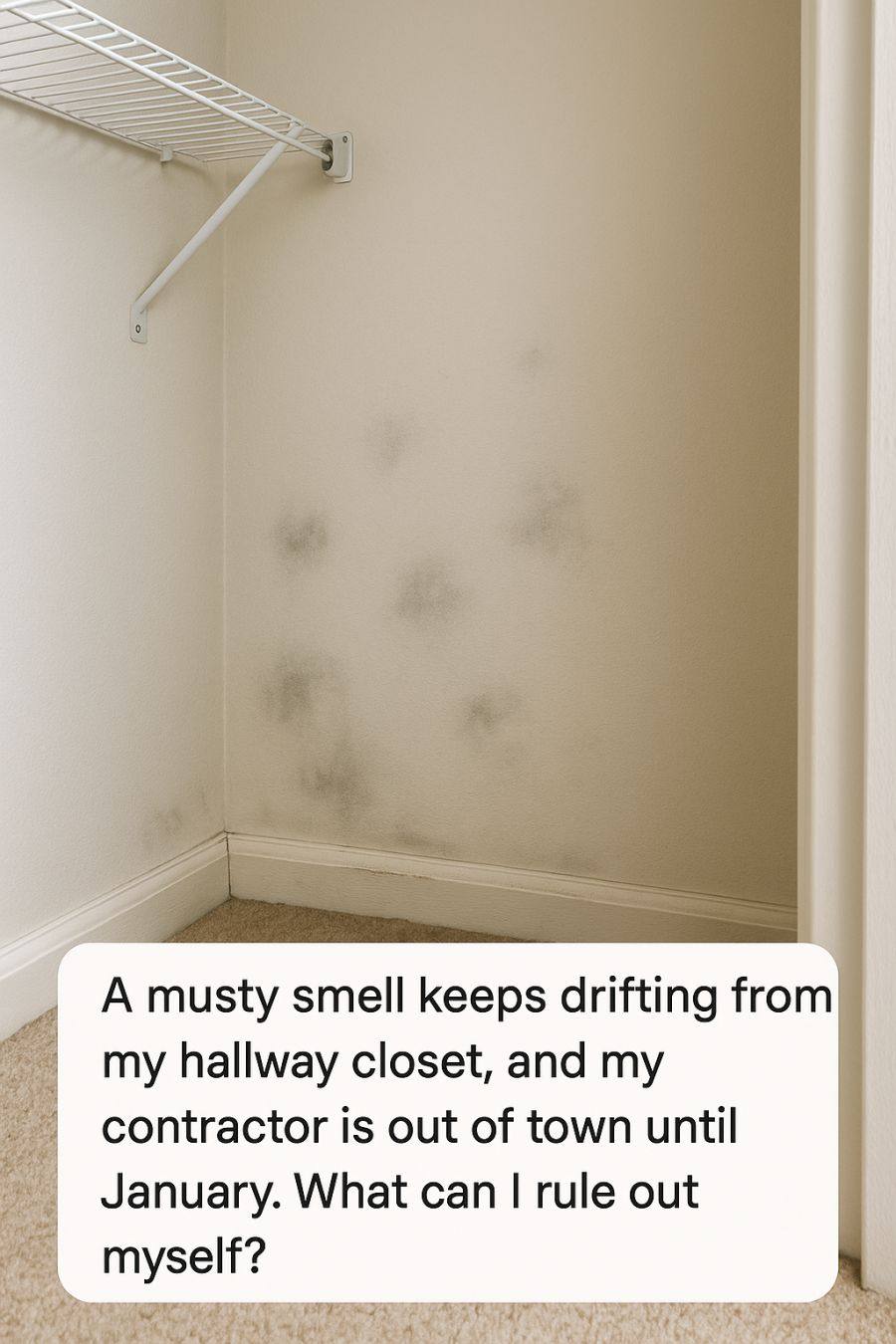
- Check baseboards and corners: Look for discoloration, bubbling paint, or warped trim.
- Sniff test near the floor: Odors stronger at floor level can indicate slab moisture or hidden leaks nearby.
You can also place a small hygrometer inside the closet. Humidity consistently above 55–60% suggests a moisture problem.
4. Rule Out HVAC and Plumbing Issues
If the closet shares a wall with a bathroom, laundry area, or HVAC duct:
- Listen for dripping or running water sounds.
- Check nearby fixtures for slow leaks.
- See if the smell worsens when heating or cooling systems run, which may indicate condensation in ducts.
If there’s no change with HVAC use, you can likely rule that out for now.
5. Inspect for Mold—Without Disturbing It
Visible mold isn’t always present, but you can still check safely:
- Look for black, green, or white spotting on walls, shelves, or ceiling.
- Avoid scraping or disturbing anything suspicious.
If you don’t see visible growth and the smell isn’t worsening, active mold growth is less likely—though not impossible.
6. Consider the Possibility of Old Materials
Older homes may have lingering odors from:
- Old wood framing
- Aging insulation
- Previously repaired water damage
If the smell is faint, stable, and not spreading, it may be tied to older materials rather than an active issue.
Temporary Fixes While You Wait
Until your contractor returns:
- Use moisture absorbers or baking soda
- Run a dehumidifier nearby
- Clean hard surfaces with vinegar or hydrogen peroxide
- Keep the door open when possible
When Not to Ignore It
You should escalate sooner if:
- The smell becomes stronger or spreads
- You see visible mold
- Walls or floors feel damp
- Anyone experiences headaches or respiratory irritation
The Bottom Line
You can safely rule out stored items, airflow problems, and obvious moisture issues on your own. If the smell persists despite an empty, well-ventilated closet, it’s likely a hidden moisture source that will require professional inspection. Until then, controlling humidity and improving airflow can prevent the issue from getting worse—and give you peace of mind while you wait for your contractor.
