
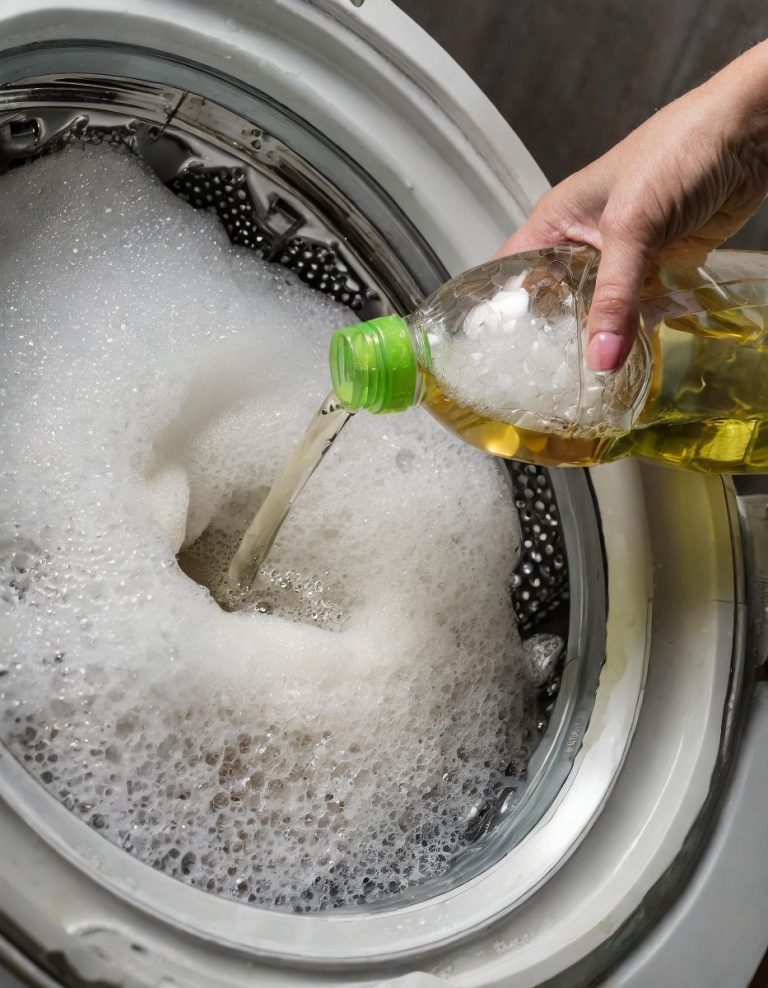
Why Vinegar Works in Laundry
White distilled vinegar is mildly acidic, which makes it excellent at breaking down residue. Over time, detergent, fabric softener, minerals from hard water, and body oils build up in fabrics. This buildup dulls whites, stiffens towels, and traps odors.
Vinegar helps by:
- Dissolving detergent and mineral residue
- Softening fibers naturally
- Neutralizing odors instead of masking them
- Helping whites look brighter by removing dulling buildup
It doesn’t bleach fabric or coat it the way commercial softeners do. Instead, it cleans at a deeper level.
The Most Common Mistake People Make
The biggest mistake is adding vinegar at the wrong time.
Many people pour vinegar directly onto clothes at the start of the wash, mixing it with detergent. This reduces its effectiveness because vinegar neutralizes detergent before the detergent has a chance to work properly. The result? Clothes that aren’t fully cleaned—and vinegar that doesn’t get to do its job.
Another common mistake is using too much. More vinegar doesn’t mean better results and can weaken fibers if overused.
The Right Way to Use Vinegar for Laundry
For Whiter Whites
- Use ½ to 1 cup of white distilled vinegar
- Add it to the fabric softener dispenser or during the rinse cycle
- Wash whites as usual with your regular detergent
This allows the detergent to clean first, and the vinegar to remove leftover residue afterward—revealing brighter whites without harsh chemicals.
For Softer Towels
- Skip commercial fabric softener entirely
- Add ½ cup of vinegar to the rinse cycle
- Wash towels in warm or hot water (check care labels)
Fabric softeners coat towels with residue that makes them less absorbent. Vinegar removes that buildup, restoring softness and absorbency at the same time.
For Odor Removal
Vinegar is especially effective for:
- Musty towels
- Sweat-smelling clothes
- Athletic wear
Add 1 cup of vinegar to the rinse cycle and let clothes air-dry if possible. Odors fade as the vinegar evaporates.
What Vinegar Should Not Be Used For
While vinegar is useful, it isn’t universal.
Avoid using vinegar:
- On delicate fabrics like silk or acetate
- Regularly on elastic-heavy items (like some athletic wear)
- Mixed with bleach (this is unsafe and should never be done)
Occasional use is safe for most everyday laundry, but it doesn’t need to replace every wash.
Will Clothes Smell Like Vinegar?
No—when used correctly. The vinegar smell disappears completely as clothes dry. If a scent remains, it usually means too much vinegar was used or the load was overloaded.
