
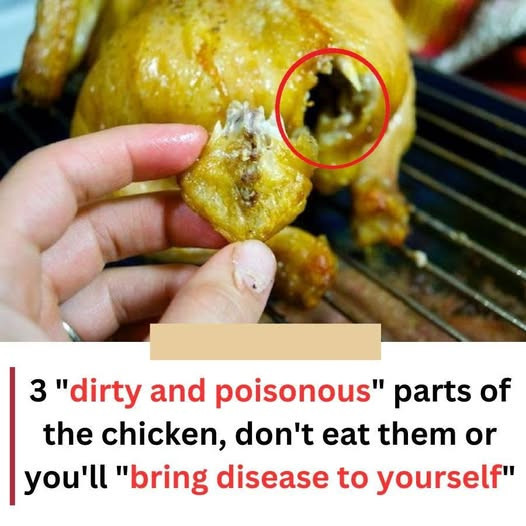
“Dirty and Poisonous” Parts of the Chicken? Here’s the Truth You Should Know
You may have heard alarming claims online warning people to avoid certain chicken parts because they’re “dirty,” “toxic,” or can “bring disease.” While that language is exaggerated and misleading, there are specific parts of a chicken that require caution due to food safety, hygiene, and preparation concerns.
Let’s separate fact from fear, and explain what actually matters when handling and eating chicken safely.
1. The Lungs (Often Called “Chicken Sponges”)
What’s the concern?
Chicken lungs sit inside the rib cavity and are sometimes left behind during processing. They can trap blood and debris.
The reality:
- They are not poisonous
- They may carry bacteria if not properly removed and cooked
- Many cultures remove them out of preference, not danger
Bottom line:
Remove them during cleaning if present. Proper cooking kills harmful bacteria.
2. Raw Chicken Skin (When Mishandled)
What’s the concern?
Chicken skin can hold more bacteria than lean meat, especially when raw.
The reality:
- Skin itself is not toxic
- Risk comes from improper handling or undercooking
- Once fully cooked, it is safe to eat
Bottom line:
Handle raw chicken carefully, avoid cross-contamination, and cook thoroughly.
3. Undercooked or Improperly Cleaned Organs
This includes the liver, gizzards, and heart.
What’s the concern?
Organs can carry higher bacterial loads if undercooked.
The reality:
- These parts are commonly eaten worldwide
- They are safe when cooked fully
- Eating them raw or undercooked increases risk of foodborne illness
Bottom line:
Cook organs thoroughly and buy them from reliable sources.
What Actually Causes Chicken-Related Illness
Not specific “poisonous parts,” but:
- Undercooking
- Poor storage
- Cross-contamination with other foods
- Inadequate hand and surface cleaning
Bacteria like Salmonella and Campylobacter are the real issue—and they’re eliminated by proper cooking.
Safe Chicken Handling Tips
- Cook chicken to an internal temperature of 165°F (74°C)
- Wash hands and surfaces after handling raw chicken
- Avoid rinsing raw chicken (it spreads bacteria)
- Store raw chicken separately from other foods
Final Thoughts
No part of a chicken is inherently “dirty” or “poisonous” in the dramatic way social media sometimes claims. The real danger comes from improper handling and cooking, not from eating specific parts.
