
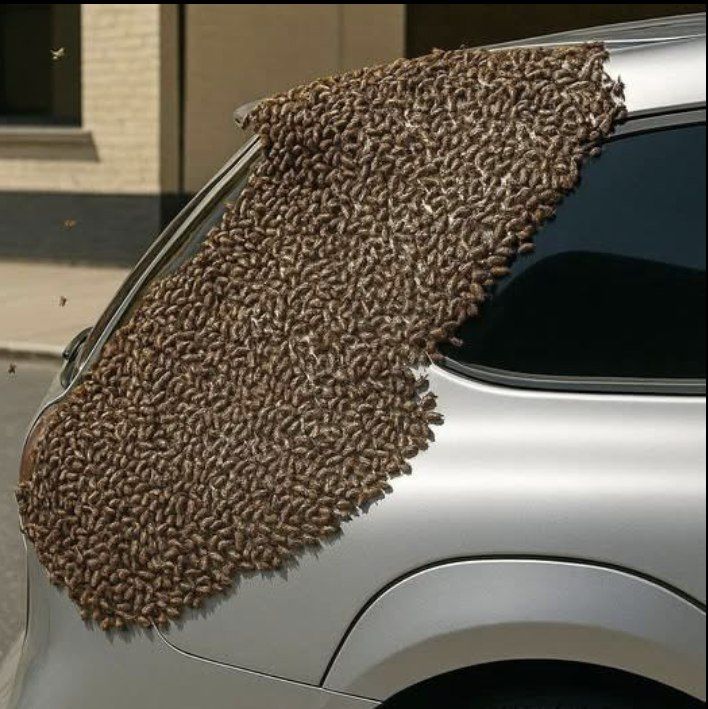
When You See Bees Like This, Don’t Be Afraid — And Please Don’t Interfere
Seeing a large cluster of bees gathered on a tree branch, fence, wall, or even a car can be startling. Many people panic and immediately think about calling emergency services or trying to remove them. But experts say that in most cases, there’s absolutely no reason to be afraid — and no reason to intervene.
What You’re Seeing Is Likely a Bee Swarm
When bees gather tightly together in a large group, they are usually swarming. This is a natural and temporary behavior that happens when a hive becomes too large and a queen leaves with part of the colony to find a new home.
During this time:
- The bees are resting
- They are focused on protecting their queen
- They are not aggressive
In fact, swarming bees are often at their calmest because they have no hive or honey to defend.
Why You Shouldn’t Touch or Disturb Them
Trying to move, spray, or harm swarming bees can:
- Stress the bees and make them defensive
- Kill beneficial pollinators
- Disrupt an important natural process
Poisoning or killing bees also harms the environment, as bees play a crucial role in pollinating plants and supporting food production.
Don’t Call Emergency Services
Firefighters and civil protection services are not meant to handle healthy bee swarms. In many regions, they now redirect these calls to local beekeepers, who are trained to safely relocate bees if needed.
If the swarm is in a dangerous location, the best action is to contact:
- A local beekeeper
- A beekeeping association
- A wildlife or environmental service
What You Should Do Instead
- Keep a safe distance
- Keep pets and children away
- Let the bees be
Most swarms move on within a few hours to a couple of days once scout bees find a suitable new home.
Why Bees Matter
Bees are essential pollinators. Without them, many fruits, vegetables, and flowers would struggle to grow. Protecting bees means protecting ecosystems — and our food supply.
