
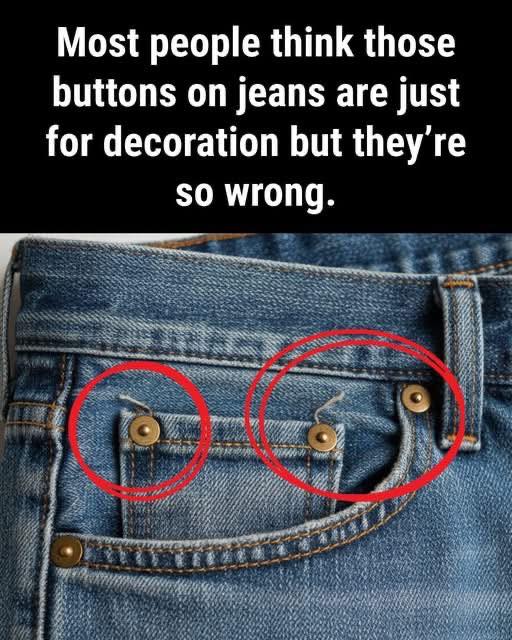
The Hidden Purpose Behind Those Tiny Buttons on Your Jeans
If you’ve ever looked closely at a pair of jeans, you’ve probably noticed the small metal buttons—often copper or brass—placed at the corners of pockets and along seams. They’re easy to overlook and even easier to assume are just decorative. But those tiny buttons, called rivets, have a practical origin rooted in durability, hard work, and a bit of American history.
Not Just Decoration: What Those Buttons Really Are
Those little metal studs aren’t buttons at all. They’re rivets, and their job is to reinforce areas of jeans that experience the most stress—like pocket corners and seams. When you sit, bend, or carry items in your pockets, these spots are under constant tension. Rivets help keep the fabric from tearing, extending the life of the jeans.
A Solution Born From Hard Work
The story of rivets begins in the late 1800s during the Gold Rush era in the United States. Workers such as miners, cowboys, and laborers needed clothing that could withstand long days of intense physical activity. Denim pants were popular, but they had a problem: they tore easily at stress points.
In 1873, tailor Jacob Davis came up with a simple but brilliant fix—he reinforced the weak spots on denim pants with metal rivets. Recognizing the value of his idea, he partnered with fabric supplier Levi Strauss, and together they patented the design. This innovation laid the foundation for what we now recognize as modern blue jeans.
Why Rivets Are Placed Where They Are
If you look carefully, rivets are usually found at:
- The top corners of front pockets
- Sometimes at the base of the fly
- Occasionally at the back pockets (on older or vintage styles)
These areas are natural stress points. For example, repeatedly putting your hands into your pockets or carrying items like keys or tools puts pressure on the seams. Rivets act like tiny anchors, holding the fabric together where it’s most likely to fail.
Why Some Jeans Have Fewer Rivets Today
Interestingly, many modern jeans have fewer visible rivets than older designs. There are a couple of reasons for this:
- Comfort: Early rivets sometimes scratched furniture or irritated skin.
- Manufacturing advances: Stronger stitching techniques and reinforced fabrics now reduce the need for metal hardware everywhere.
- Style preferences: Sleeker designs often favor a cleaner look.
That said, many brands keep rivets as a nod to tradition and authenticity—even when they’re no longer strictly necessary.
Copper Rivets: A Deliberate Choice
You might notice that most rivets are copper-colored. That’s not accidental. Copper is durable, resistant to rust, and flexible enough to withstand repeated stress without snapping. These qualities made it ideal for workwear and helped jeans survive harsh conditions.
A Small Detail With Big Impact
What started as a practical fix became one of the most recognizable features of jeans worldwide. Rivets represent more than just reinforcement—they’re a symbol of craftsmanship, innovation, and the working-class roots of denim fashion.
Next Time You Put On Your Jeans…
Take a moment to notice those tiny metal details. They’re a reminder that even the smallest design choices can have a big purpose. From gold miners to modern wardrobes, rivets have quietly done their job for over a century—holding your jeans together, one seam at a time.
If you’d like, I can also:
