
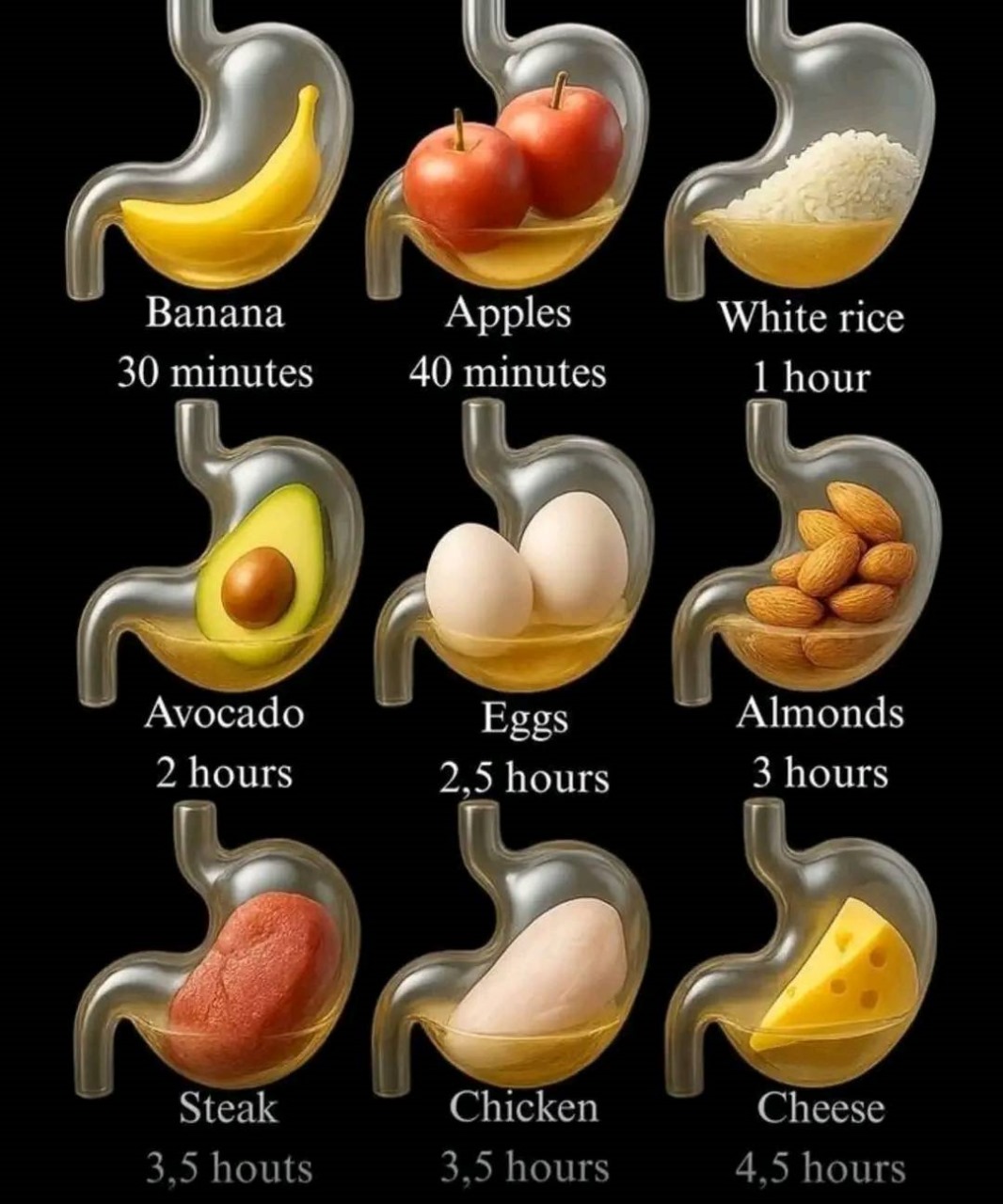
How Long Does Your Stomach Take to Digest Your Favorite Food? The Answer Might Surprise You!
Have you ever wondered why sometimes you feel full for hours after a meal, while other times your stomach seems to demand food again almost immediately? The answer lies in how your body digests different types of foods—and the results might surprise you!
The Journey of Food Through Your Stomach
When you take a bite of your favorite meal, digestion begins almost immediately in your mouth, as enzymes in saliva start breaking down carbohydrates. Once swallowed, the food travels down the esophagus into your stomach, where it’s mixed with gastric juices. This is where the real “work” begins: proteins are broken down, fats are emulsified, and carbohydrates continue to be processed.
But how long does this process actually take? It depends on the type of food you eat.
Quick-Digesting Foods
Foods high in simple carbohydrates—like fruit, white bread, or sugary snacks—pass through your stomach relatively quickly, usually within 30 minutes to 2 hours. That’s why you might feel hungry again shortly after eating a candy bar or a bowl of cereal.
Moderate-Digesting Foods
Meals that contain a mix of carbohydrates, proteins, and some fats—think chicken with rice or a veggie stir-fry—can take 3 to 4 hours to leave your stomach. These foods provide a more sustained energy release and keep you feeling fuller for longer.
Slow-Digesting Foods
High-fat and high-protein meals, such as steak, cheese, or nuts, can linger in your stomach for 5 to 6 hours or more. Fats slow down digestion because they take longer to break down, which is why a heavy, cheesy pizza or a burger can make you feel full for a long time.
Factors That Influence Digestion
It’s important to note that digestion isn’t the same for everyone. Factors such as age, metabolism, activity level, and even stress can affect how quickly your stomach empties. For example:
- Younger people often digest food faster than older adults.
- Physical activity can speed up digestion.
- Stress and anxiety may slow down the process, leaving you feeling heavy and bloated.
Surprising Insights
One surprising fact: even though fats take longer to digest, they are essential for keeping you satisfied and supplying your body with energy. On the other hand, some “healthy” foods like smoothies or juice can leave you hungry faster than a small handful of nuts.
Understanding how your stomach digests your favorite foods can help you plan meals better, manage your energy levels, and even avoid overeating.
So next time you reach for that snack, think about how long it might keep you full—and why your body craves different types of fuel at different times.
