
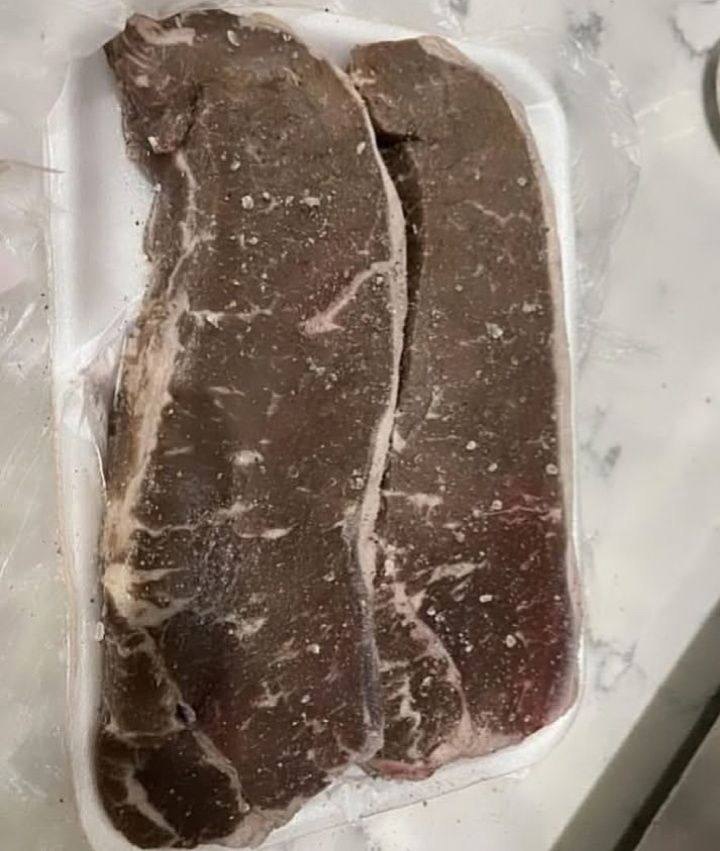
“It Expired Today… I Paid $27 for It, So I’m Gonna Eat It.”
Why This Thinking Can Be Dangerous—and What You Should Know Instead
It’s a situation many people recognize instantly:
You pull raw meat out of the fridge. The date says today. It’s a little brown. The smell is… off, but hard to tell. You already paid good money for it. So you season it, cook it, and hope for the best.
This moment is exactly where food safety and human psychology collide—and it’s worth slowing down to understand why this can be risky.
Expiration Dates: What They Really Mean
First, not all dates are created equal:
- “Sell by” dates guide stores, not consumers
- “Use by” or “Expiration” dates are safety-related
If meat reaches its use-by date, it’s at the edge of its safe window, even if stored properly. Past that point, bacteria growth can increase rapidly—even if cooking kills some bacteria, toxins they leave behind may not be destroyed by heat.
Browning: Normal or Not?
Some browning can be normal due to oxidation, especially in vacuum-sealed meat. But browning combined with other signs is where trouble starts.
Red flags include:
- Slimy or sticky texture
- Sour, sulfur-like, or “eggy” smell
- Gray-green patches
- Gas buildup or swollen packaging
If browning is paired with any unusual smell, that’s your cue to stop.
Why Smell Confusion Is Dangerous
Raw meat already smells unpleasant to many people, which makes it harder to detect spoilage. If you can’t clearly tell whether the smell is “normal raw meat” or “off,” that uncertainty alone is a warning sign.
Food safety isn’t about convincing yourself—it’s about certainty.
The $27 Trap: The Sunk Cost Fallacy
This is the psychological trap at play:
“I already spent the money, so I might as well eat it.”
But eating questionable food doesn’t recover your money—it adds risk:
- Food poisoning
- Severe stomach illness
- Missed work or medical bills
- Long-term gut issues in extreme cases
In reality, the most expensive outcome is getting sick.
Cooking Does NOT Always Make It Safe
This is one of the biggest misconceptions.
- Cooking kills bacteria
- It does NOT neutralize all toxins produced by spoiled meat
If spoilage has begun, heat may make the food taste fine while still being unsafe.
The Rule That Matters Most
If smell, texture, or appearance raises doubt, don’t eat it—no matter the date or price.
Food safety experts agree:
“When in doubt, throw it out.”
It’s not wasteful—it’s preventative care.
What to Do Next Time
- Freeze meat early if you won’t use it soon
- Trust your senses over the price tag
- Remember: money can be replaced—your health can’t
Final Thought
Eating food shouldn’t feel like a gamble. If you ever find yourself convincing yourself it’s “probably fine,” that’s usually your instinct telling you it isn’t.
No meal—no matter how expensive—is worth the risk.
